Psychiatric hospitals often have a bad reputation in society.
Whether it's in books, films or what we hear around the subject, it remains a rather vague and troubling reality.It's rare to hear testimonials from people who have actually experienced it, whether for fear of judgment or difficulty in expressing their feelings.
The aim of this project is to present objects belonging to people who have been patients of these institutions. Behind these objects, personalities emerge, while remaining anonymous.
For this reason, the names were changed and we only know their age at the moment of the most meaningful hospitalisation.
Juliette, 25 years old, 2025
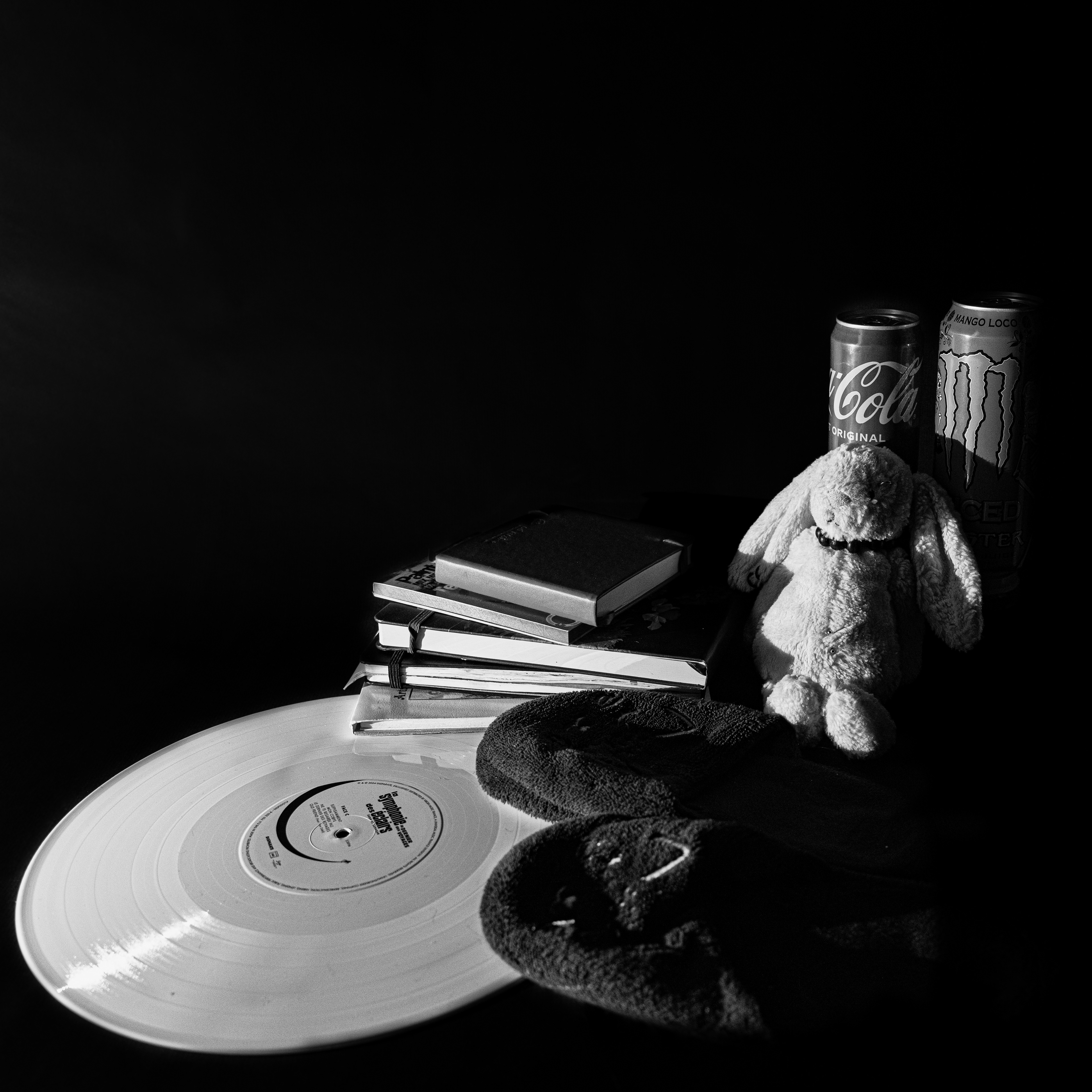
“ « Not everything in life is black and white ». I've often heard this phrase applied to myself. As a bipolar sufferer, I go through phases with my spirits very high, and others with my spirits very low. In the end, it's as if life were in black and white, with big contrasts between these phases.
I took the objects that marked me during my first hospitalisation. I wasn't sure what to take with me at this time. I asked a friend what to take when you're hospitalised. A few days later, he gave me this cuddle toy to take with me during this time. I didn't want to take my childhood one. I didn't necessarily think about comfort. My aunt brought me some slippers. They were cat-shaped, I missed my cat. From then on, even when I went outside, I went in slippers.
I used to draw a lot at that time. It allowed me to isolate myself in my own world. I did it while listening to music to isolate myself from the other patients, especially since I had a shared room. When I got out, I bought the vinyl of my favourite songs.
My friends and family used to bring me Coke to cheer me up. The girl I shared a room with used to buy me Monster. I'd never drunk one before, and I never drank more afterwards. It kept me awake and compensated for the sedative effects of the medication. We were only allowed coffee at very specific times. One day, a friend came to play cards with me. We played on the floor because we didn't have a table. He was the only one who didn't ask me how it was going. We just had a good time, leaving the situation I was living aside.”
Sophia, 26 ans, 2022
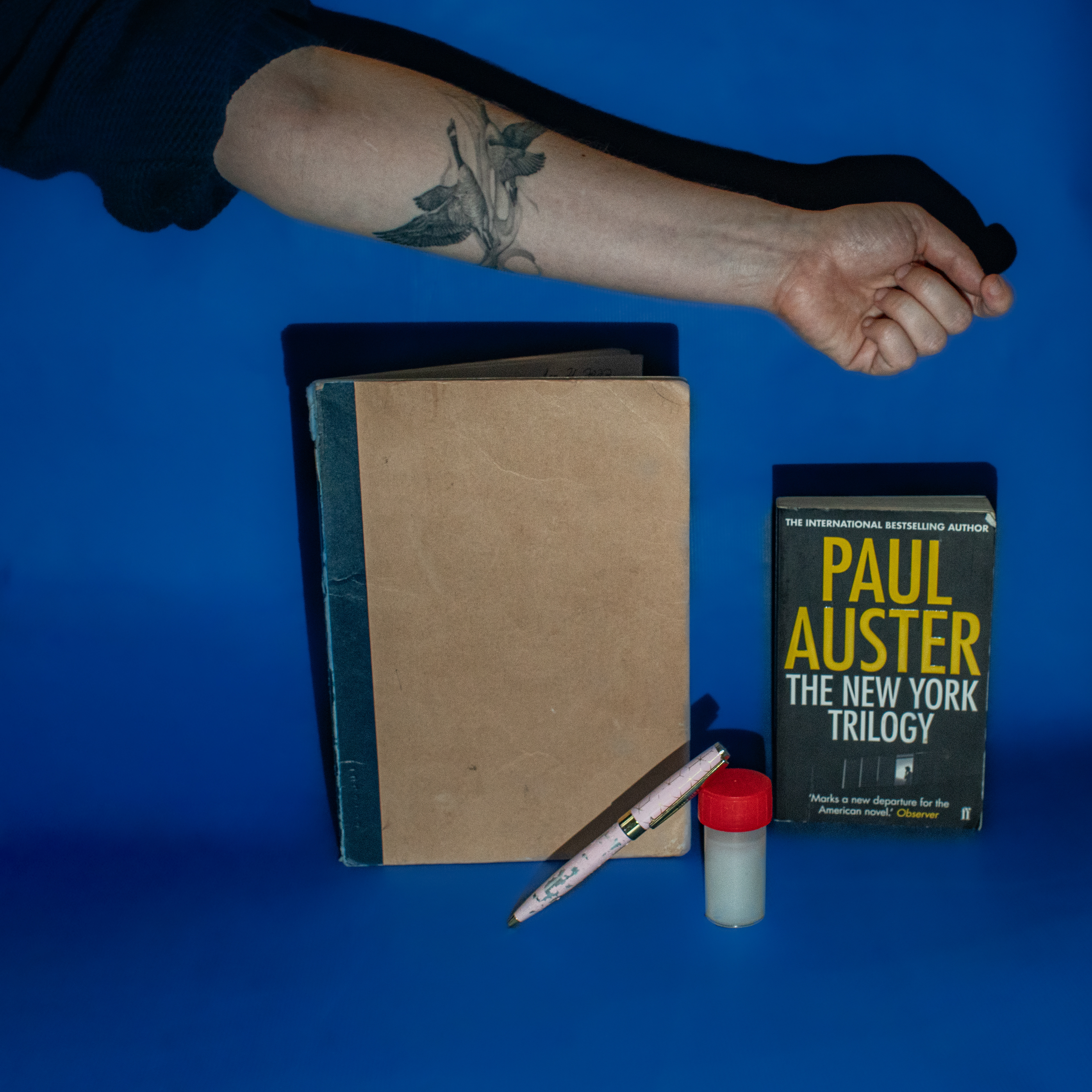
“I am American. I was hospitalized during my first year in France. I didn't dare speak French before, and I found myself with caregivers who didn't speak English. I had been through some traumatic experiences, and speaking French allowed me to distance myself and start speaking French. In my room, there was a blue wall, and I was wearing blue pajamas; it was one of the only colors available. After a few days, I was allowed to have my phone, and I took pictures of the outside; the colors outside struck me.
It was during the COVID period, and my hands were very dry from the hand sanitizer; they were bleeding. I asked a nurse for some cream and she gave it to me in this little tube. I kept it and now I use it when I go camping.
I haven't read this book by Paul Aster yet. It was a Christmas present from my best friend, the only one who visited me during that period when I was very isolated. I love reading, it's comforting for me, but I couldn't do it in the hospital because of the medication.
I love writing, and this diary is a record of the most painful period of my life. In the hospital, I couldn't write, but I drew. I made a drawing about the day I went to the hospital alone. It was very windy that evening, and it was as if my legs were moving forward and my head was staying behind, as if dissociated.
The pen was a gift from my roommate. In the hospital, we didn't have much, but we were there for each other, and we decided to give each other gifts, so I gave her some mascara I had. I met lots of people with whom I lost touch. I remember there was a system where a few people could go out, and the other patients made lists of what they needed to buy outside. The psychiatric hospital is a time of isolation but also of community with others.
I got this tattoo in 2023, on the anniversary of my hospitalization. It features two wild geese inspired by Mary Oliver's poem “Wild Geese.” It also represents the two places I live, between which I commute, in the United States and France.”
Henri, 21 years old, 2023
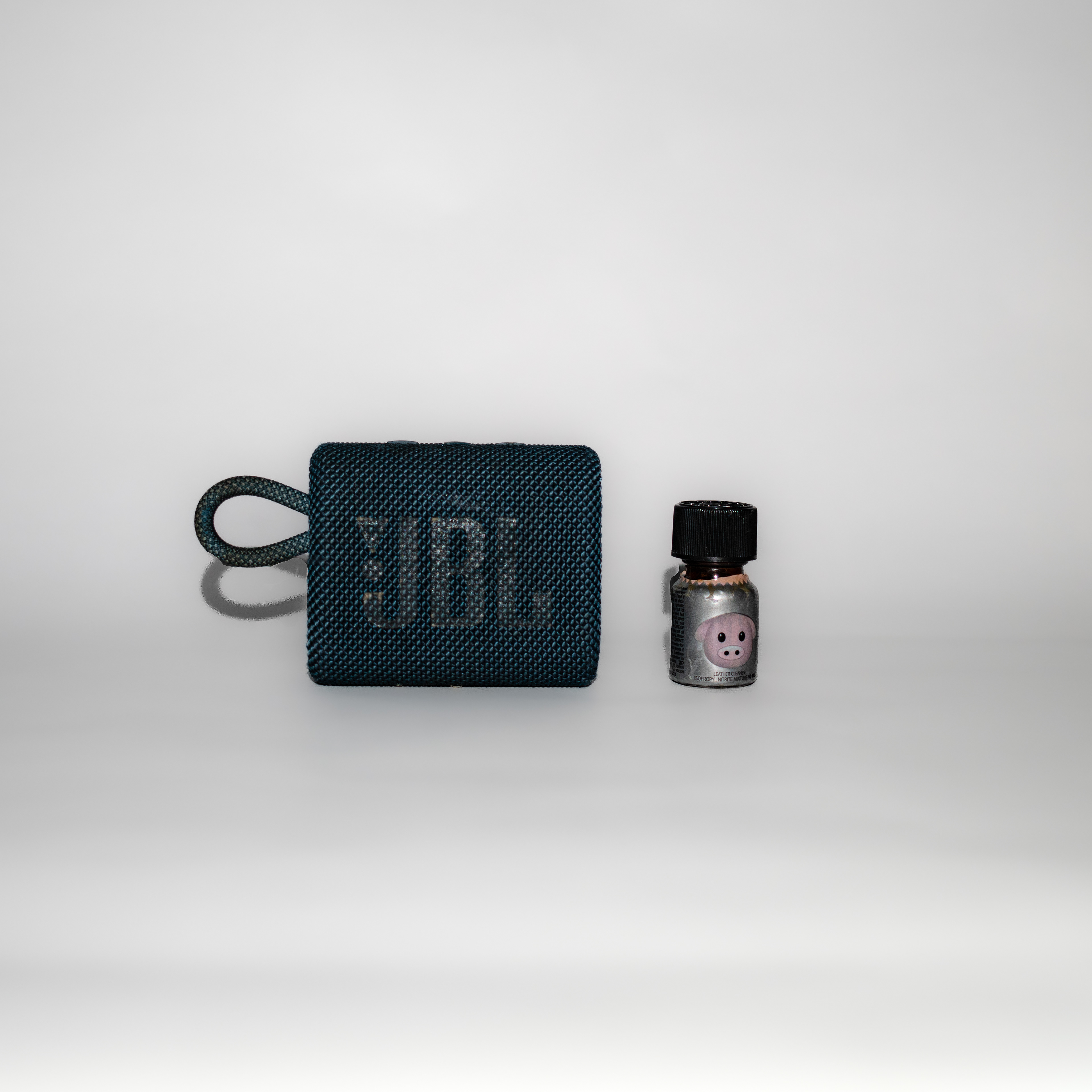
“ Feeling not fine, suicidal, out of place, is the other side of being happy, blissful and carefree. Once you realise that feeling bad is as necessary as its opposite, you can stop trying to chase happiness and just focus on the only thing that’s real : right here, right now. Because darkness is not an autonomous entity. No matter how dark the night has been, when the sun comes at dawn, automatically, effortlessly, the sun removes the darkness from the world. Everybody faces this, but bipolar people feel it more intensely than others. Which is why it’s so important to be present, conscious and grateful of what you are and what the world is like. Because everything that happens to you is only the result of the energy you’ve been projecting onto others. To quote Tolstoy : « If you want to happy, be. »
Every time I go to a psychiatric hospital, I feel the risk is that life can be forlorn. My antidote is music. An art form that speaks to everyone, everywhere, every time. Music is made to make us feel and to make us closer. Someone hears the song you’re playing and before you know it you listen to the same song the rest of your life with that person.
Being sober is like eternity, it’s long, specially toward the end. So you need a lighter, harmless alternative. For me and a lot of the people around me at that time, poppers was this alternative. A chance to feel a little wild, like a rebel, a little high. Even just for a few seconds. Time goes round and round and round, what I’ve experienced, I will experience it over and over again. ”
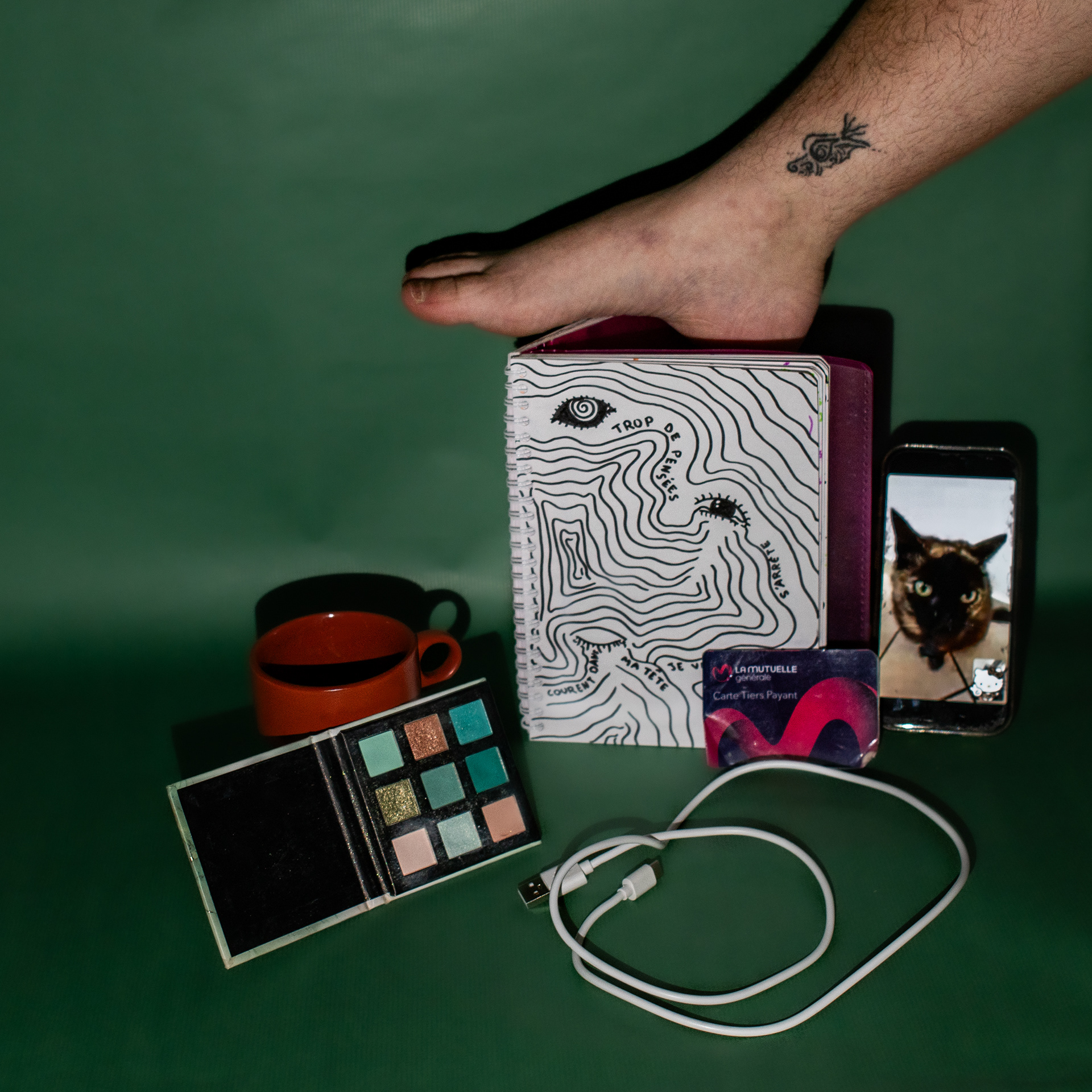
Louise, 19 ans, 2024
I was hospitalized for the first time when I was 19. It's strange to be hospitalized at that age, because you're often the youngest and because it's the age when you start going out with your friends and partying, so you really feel the difference between yourself and the outside world. It wasn't the first time I'd been told I needed to be hospitalized. When I went in, I knew I was doing it to take care of myself, and I was ready. At the hospital, we had access to an outdoor area with lots of plants, perhaps to help us get better.
During my second hospitalization, which was the most memorable for me, we weren't allowed to have chargers or glass objects because of the risk of suicide. It's strange to see how people view you as a danger to yourself. I had never thought about doing that with a charger, but afterwards I associated those objects with it.
In the morning, we were allowed coffee. The nursing assistant knew I drank coffee with milk and made it for me every morning, which added to the comfort of being there. For the rest of the day, we had access to a coffee machine, but it only had decaf. At the hospital, I really developed my makeup skills; a lot of people there were very good at applying makeup. It was a way for me to feel good and beautiful, especially since I had gone there partly because of eating disorder issues. Adding color helped a lot during that period. The nurses complimented us a lot, which showed that they cared about us. It also helped me make friends.
We spent a lot of time awake: we got up early and went to bed late, so the days were very long. We didn't have much to do, so art quickly became an option, whether it was filming, playing music, or drawing.
I missed my cat at that time; she was a real comfort when I was at home. She wasn't doing well because she's a real sponge and she felt all my emotions. When I was hospitalized and my mother called me, I always asked to see her.
This tattoo was done during my hospitalization by another patient who wasn't supposed to have her tattoo machine. When you're hospitalized, you have so little freedom that you allow yourself to do silly things from time to time.
I never used my health insurance card and my social security card as much as I did during that period. I always had it with me because I was afraid of having an anxiety attack and having to use it. Today, I tell myself that it's always better to have it with you, just in case.